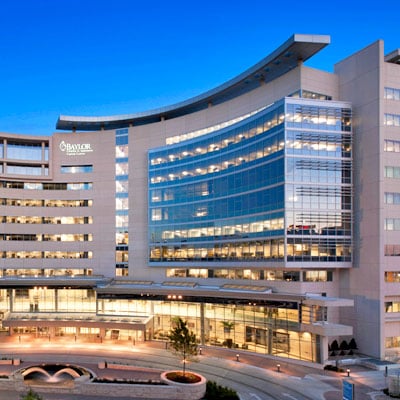
Our approach to rectal cancer treatment
When you’re diagnosed with rectal cancer, our team of experts is here to guide you through your options. Our multidisciplinary approach to cancer care offers several advantages to our patients. From the initial diagnosis to treatment planning and results analysis, we gather insights from multiple experts simultaneously as radiologists, oncologists, surgical experts and pathologists work closely together to guide your care.
Our cancer care locations offer advanced treatments and technology, including robotic surgery and minimally invasive procedures that preserve your digestive function so that you can choose the right care for your needs.
We’re also involved in innovative research in colorectal cancer treatment to provide services that may not be available at other centers. And with the largest network of hospital-based cancer programs in the state, we make it convenient to find rectal cancer care that fits your life.
Even more, we surround you with tools and resources that support you as a whole person. Whether it’s navigating your rectal cancer treatment choices or guiding you through your recovery, we will be by your side.
Colostomy or ileostomy
When surgery for rectal cancer prevents you from passing stool through the anus as you usually would, you may need a colostomy or ileostomy. These ostomy surgeries connect your digestive tract to a stoma—an opening in your belly area. A stoma allows waste to pass out of the body into a pouch.
In an ileostomy procedure, your surgeon connects the bottom of your small intestine to the opening. In a colostomy, your surgeon connects part of the colon to the stoma. With both procedures, a specially trained ostomy nurse will teach you how to care for your stoma and pouch so that you feel comfortable keeping the area healthy moving forward.
Many surgical techniques exist today to maintain digestive function in those with rectal cancer without needing a colostomy or ileostomy. When required, these procedures may be used temporarily to give you time to heal or as a permanent solution. When you have a temporary colostomy or ileostomy, the remaining pieces of your intestinal tract are reconnected during another surgery to restore your normal bowel function.
Finding specialized treatment for rectal cancer
We help you get care at a location that fits your needs. We offer several locations for your care, including specialized rectal cancer treatment centers in North and Central Texas. It is important to look for treatment that uses a multidisciplinary team approach.